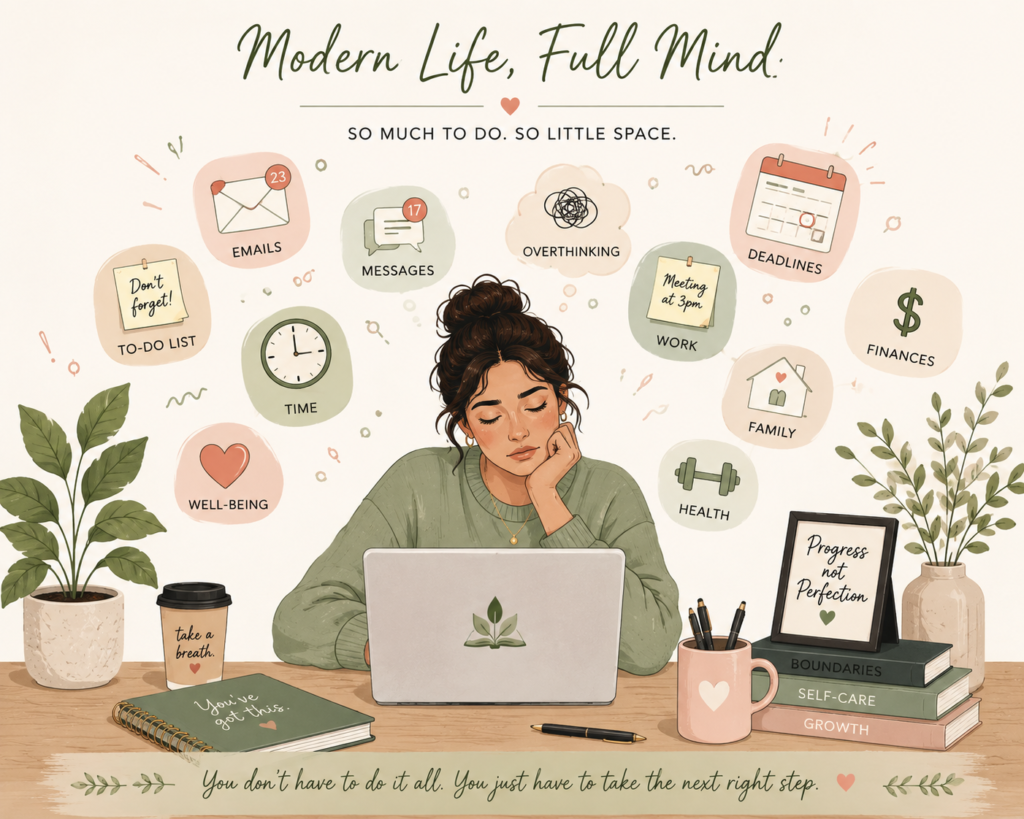
Think about the last time someone asked you, “How are you?” How often do we automatically respond, “I’m so busy,” “I’m stressed,” or “I’m overwhelmed?” Somewhere along the way, stress became more than a temporary response to a difficult situation — it became the language we use to describe our everyday lives.
Stress has become our default setting
Unfortunately, this is the reality for many people. According to the American Psychological Association “Stress in America” survey, a majority of Americans say their stress levels have increased over the past five years, with around 75% reporting physical or emotional symptoms related to stress. Also, about 49% of Americans experience significant daily stress, one of the highest rates among high-income nations. For context, that’s nearly one in every two adults walking through life with a daily undercurrent of tension. Although there are many reasons why we are feeling more stressed, which range from financial to health concerns, we live in a society that has normalized always being busy, which can lead to constant feelings of overwhelm.
Our culture is one that glorifies and promotes productivity, hustle and achievement. Society often treats overworking and sacrificing personal time as signs of dedication, commitment, and success. Also, cultural expectations-such as self-silencing or suppressing negative emotions, frame toxic stress responses as admirable strengths. Although working from home has many benefits, it can blur the line between personal time and labor, creating an expectation of constant availability. Add to that the constant stimulation we get from being on our phones, and it’s easy to see why we are feeling drained and overly stressed.
What Actually Happens in the Stress Response
What exactly is stress? Stress is the natural physical and mental response to a challenge, demand or threat. When you face a tough situation, your brain triggers a “fight-or-flight” response, releasing hormones that give you a quick burst of energy and alertness (there are two additional responses that may occur, freeze and fawn). The stress response is designed to protect us. It becomes problematic when the response is activated repeatedly without adequate recovery. Not all stress is bad. Some stress, known as eustress, can be good. Examples of these include going on vacation, graduating, getting promoted, or having a baby. When stress is maladaptive or negative, it’s known as distress. These can include getting divorced, losing a job, or medical issues. Note: stressors can be subjective, what may be stressful to one person may not be stressful to another.
As mentioned above, our stress response activates when we face a tough situation, but once we are done or get through it, it returns to its baseline. But what happens when are constantly facing tough situations and/or we continue to push ourselves without a break or rest? If our body stays in constant “flight, fight, freeze, or fawn” mode because of stress we start to feel it in our body and our brain. We feel overwhelmed and exhausted even when we aren’t doing that much. We start to have problems with both our physical and mental health. We neglect our sleep and nutrition. It takes a toll on us.
From Stress to Chronic Stress
Despite our body and mind telling us that something is off, many times we ignore these signs and/or minimize how it’s negatively impacting or affecting our lives. We will downplay its seriousness, rationalize our behavior, or at its worst, be in denial. For those of us that are high achievers, we may sacrifice our well-being in order to get the job done quickly and move on to the next task. We say we will rest later, but instead, we keep adding more things to our to-do list. Unfortunately, when stress goes unrecognized or unmanaged, it can lead to chronic stress.
Chronic Stress is a consistent sense of feeling pressured and overwhelmed over a long period of time. When we don’t allow our autonomic nervous system to return to rest after being in flight/fight/fawn/freeze mode, it continuously stays activated. Chronic stress slowly drains a person’s psychological resources and can seriously impact their brains and bodies.
When Stress Becomes Burnout
Stress and burnout are related, but they are not the same. Stress often involves feeling like you have too much to manage. Burnout occurs when prolonged/chronic stress without adequate recovery leads to emotional exhaustion, detachment, and reduced effectiveness.
Signs Your Stress Levels May Be Too High
How can you tell if you are really stressed out? Below you’ll find a list of behaviors/feelings that may indicate that your stress is high. This is not an exhaustive list, but more of the common red flags of stress:
- Sleep changes
- Appetite changes
- Irritability/Moody
- Trouble concentrating /focusing
- Feeling disconnected
- Always feeling “behind”
- Constant headaches
- Gastrointestinal issues
- Muscle tension
- Excessive loss of hair
- Excessive dry mouth
- Tics/body twitches
- Skin rashes or Hives
If you have been experiencing any of these symptoms on a regular basis for the last few weeks, your body and mind are telling you that you are indeed stressed out!
Small Ways to Begin Addressing Your Stress
It’s important to remember that change doesn’t happen overnight. However, there are small things you can do to start feeling better and more balanced. Look at where you can add a couple of these to your schedule. Focus on starting small. Small changes can make a big difference.
- Movement/Physical activity (even a 10-minute walk helps!)
- Boundaries (Saying no to others, just because you can do something doesn’t mean you should)
- Rest without guilt (rest is not earned, rest is a basic human need)
- Social connection
- Disconnecting from your social media (set a timer to scroll through and try to stick with it)
- Sleeping 7-8 hours (even going to sleep 20 minutes earlier helps!)
- Eat! (try not to skip meals, also focus on healthy snacks if you can!)
- Breathing breaks (when you’re feeling overwhelmed or stressed, take 5 minutes and focus on taking slow deep breaths)
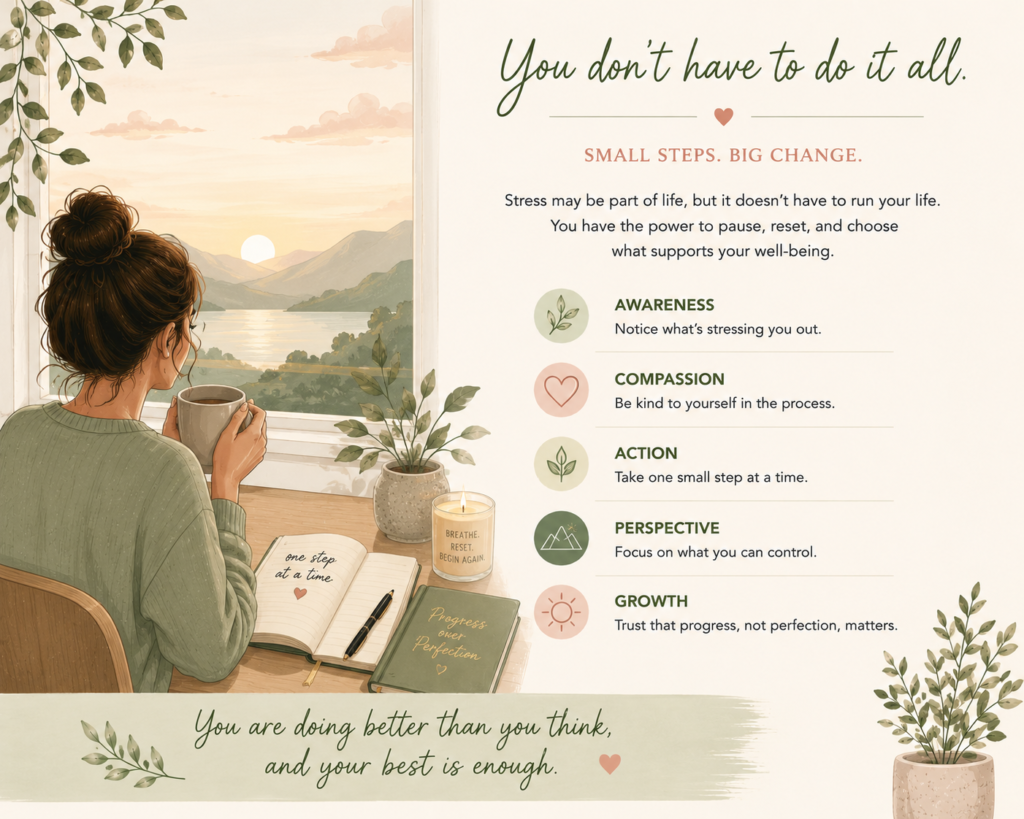
Remember to be kind to yourself and give yourself some grace as you try to implement some of these. Start with 1-2 and focus on those. It’s ok to want to achieve and be driven, but not if it’s costing you your mental and physical health and most importantly, taking away from your joy and fun! Remember, what’s the definition of insanity? Doing the same thing over and over again and expecting a different result.
Reflection Corner:
“What is my stress trying to tell me?”
🌿 Continue Your Wellness Journey
If this article resonated with you, I’d love to support you on your wellness journey.
First, here is a link to a book I recommend that focuses on helping you succeed while managing stress, Success under Stress
Second, Join The Wellness Scholar Community and receive my complimentary Wellness Starter Collection, including:
✔️ Stress Check-In Reflection Guide
✔️ Box Breathing Reflection Guide
✔️ Wellness Wheel Assessment
Plus evidence-based wellness tips, practical strategies, and new Reflection Guides delivered to your inbox.
About the Author
Dr. Carmen Ochoa-Galindo is a psychology professor, licensed therapist, and founder of The Wellness Scholar, where she combines evidence-based psychology with practical wellness strategies to help high achievers and driven people reduce stress, prevent burnout, and thrive.
References
Harvard Health Publishing. (2024, April). Understanding The Stress Response.
The American Institute of Stress. (2025, August). What The Latest Reports Say About Stress in America.
World Health Organization. (2026, March). Stress.
Yale Medicine. (nd). Chronic Stress.
Pingback: Why Being the Strong and/or Responsible One Is Exhausting: The Hidden Cost of Always Being the Person Everyone Can Count On - thewellnessscholar.com